TOXR gets green light – All about 21Shares’ low-fee XRP ETF

ambcryptoPublicado a 2025-12-12Actualizado a 2025-12-12

Resumen

After years of regulatory uncertainty, Ripple (XRP) has gained significant institutional validation in the U.S. with the approval of the 21Shares XRP ETF (TOXR) by the CBOE BZX Exchange. This brings the total number of U.S. spot XRP-related ETFs to five, accelerating capital inflow toward the $1 billion mark. 21Shares enters the market with a competitive edge, offering a low annual sponsor fee of 0.3% and tracks the CME CF XRP‐Dollar Reference Rate. While the fund’s listing is approved, its S-1 registration still carries a “delaying amendment,” awaiting final SEC approval or a CERT notice. Despite a recent 2.44% price drop to $2.01, XRP’s institutional foundation is strengthening, though short-term market momentum remains cautious.

After years of getting caught up in regulatory uncertainty, Ripple [XRP] has officially cemented its place in the U.S. institutional market.

21Shares XRP ETF gets greenlight

Amidst various XRP ETF approvals, the CBOE BZX Exchange has also approved the listing of the 21Shares XRP ETF (TOXR).

This latest green light brings the total number of U.S. spot XRP-related funds to five, intensifying the pressure on established players like Canary Capital, Bitwise, Grayscale, and Franklin Templeton.

And, now with the total capital funneling into these regulated XRP products accelerating toward $1 billion mark.

With this milestone approaching, the conversation shifts. It is no longer about whether XRP has a place on Wall Street. Instead, the focus turns to how quickly institutional capital can reshape its liquidity and price dynamics.

Why 21Shares XRP ETF a good competitor?

That being said, 21Shares enters the fray with a significant competitive advantage, offering a low annual sponsor fee of just 0.3%.

The firm charges this fee daily and pays it weekly in XRP, using this aggressive pricing strategy to capture market share quickly.

When compared to the average fees of existing crypto ETPs, 21Shares’ pricing signals that issuers expect the battle for asset gathering to play out primarily on cost.

Additionally, the fund tracks the CME CF XRP‐Dollar Reference Rate, New York Variant.

This gives investors professional‐grade exposure to XRP’s price performance without the need to manage token custody themselves.

Meanwhile, 21Shares enhances its appeal by placing strong emphasis on security and compliance. It also deploys a robust system that relies on multiple custodians, a key differentiator designed to meet the needs of institutional clients.

Regulatory and technical horizon

The CBOE has approved the listing. However, the fund’s S‐1 registration still carries a “delaying amendment.”

This procedural hurdle suggests the issuer may be waiting for the final CERT notice (Comprehensive Exchange‐Traded Receipts notice) or direct SEC approval.

Only once these steps are completed can the fund move forward with its official launch. This final step is largely procedural, given the CBOE listing approval and 21Shares’ fifth update to its S-1 earlier this week.

Now, as trading desks await the official launch, the immediate market reaction saw XRP trading at $2.01 following a modest 2.44% drop over the last 24 hours, at press time.

What’s more?

Still, this institutional validation for XRP is undeniable despite XRP’s prices confirming short-term seller strength.

In short, the market is witnessing a technical tug-of-war, wherein a solid foundation of institutional adoption is battling an entrenched bearish price structure.

Thus, while momentum is currently shaky, traders should stay cautious before the larger downtrend returns.


Final Thoughts

  • With five U.S. spot ETFs approved for listing, the asset has effectively crossed the threshold from regulatory ambiguity to Wall Street legitimacy.
  • XRP’s return to the $2.4 support zone reflects renewed buying interest driven by ETF optimism, yet a recent price drop indicates caution.
Lecturas Relacionadas

Chinese Young Man's AI Short Goes Viral Abroad! Hollywood Director Searches Online: Wants to Hire Him

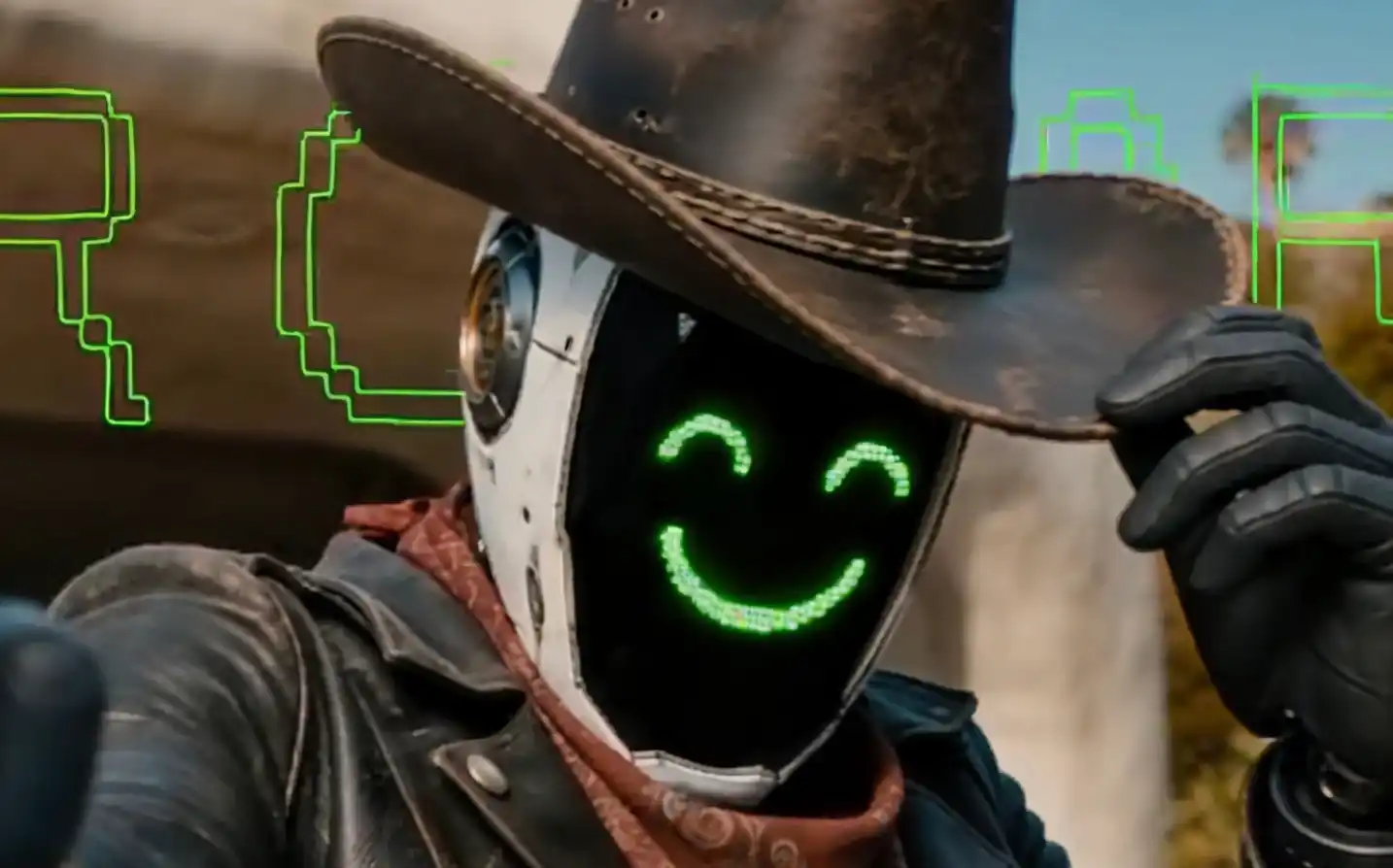
A young Chinese creator, Mx-Shell, an amateur filmmaker from Yunnan with no formal film training, has gone viral internationally with his AI-generated short film "Zombie Scavenger." Created independently in about 10 days using the Chinese AI video tool Seedance 2.0 at a minimal cost, the film features a robot cowboy in a post-apocalyptic world. Its unique atomic-punk style and cinematic quality caught the attention of Hollywood. The film initially gained little traction on Chinese platform Bilibili. However, after PJ Ace, founder of LA-based AI studio Genre.ai, shared it on X (formerly Twitter), praising it as "one of the best short films I've seen in recent years," it quickly garnered millions of views overseas. PJ Ace then publicly sought to hire the unknown director, sparking a cross-platform search. The creator, who doesn't speak English, was unaware of the overseas buzz until Chinese internet users relayed the message. Connection was eventually made via a QQ email address shared in Bilibili comments, and Mx-Shell received a job offer from the Hollywood director. The article highlights this as a case of "talent export." It argues that while China's competitive AI tool market lowers technical barriers, true success still relies on individual creativity, aesthetic judgment, and narrative skill—qualities Mx-Shell demonstrated. His story exemplifies how AI tools can empower previously unseen creators with compelling ideas to reach a global audience, even if initial recognition sometimes comes from abroad before reverberating back home.

marsbitHace 5 min(s)

Chinese Young Man's AI Short Goes Viral Abroad! Hollywood Director Searches Online: Wants to Hire Him

marsbitHace 5 min(s)

The Real AI Bubble, You Can't Buy It

The article argues that the real "bubble" in the current AI boom is largely invisible and inaccessible to the average investor. Unlike the 2000 dot-com bubble, where overvalued companies were publicly traded, the most significant value surges and financial risks are occurring in private markets. Core AI companies like OpenAI, Anthropic, xAI, and Databricks have seen valuations skyrocket (e.g., OpenAI's from $157B to $852B in 18 months), but these transactions happen through private secondary sales, not public stock exchanges. These opaque markets create an "anxiety exposure," leading public investors to chase indirect proxies like memory chip or utility stocks. The author highlights how AI wealth extraction has been radically front-loaded. Employees and founders can cash out years before a potential IPO through structured secondary sales, "founder-led secondary" deals, and collateralized loans against private equity. Major tech firms also use "acqui-hires" or technology licensing deals (like Google/Character.AI, Microsoft/Inflection AI) to secure talent and tech without full acquisitions, allowing early exits outside of regulatory scrutiny. Furthermore, the AI infrastructure build-out is compared to the 2008 real estate bubble. Massive data center projects are financed through complex, off-balance-sheet structures involving private credit, joint ventures, and asset-backed securities using GPUs as collateral (e.g., CoreWeave's deals). This creates a "shadow borrowing" system where the stability of future AI demand underpins trillions in debt, posing systemic risks if expectations falter. The recent collapse of SaaS company Pluralsight, financed by major private credit firms, is cited as a warning. The conclusion is that the most dangerous part of the AI bubble isn't in plain sight on public markets; by the time the average investor sees it, the critical wealth transfers have already occurred in private, unregulated spaces.

marsbitHace 28 min(s)

The Real AI Bubble, You Can't Buy It

marsbitHace 28 min(s)

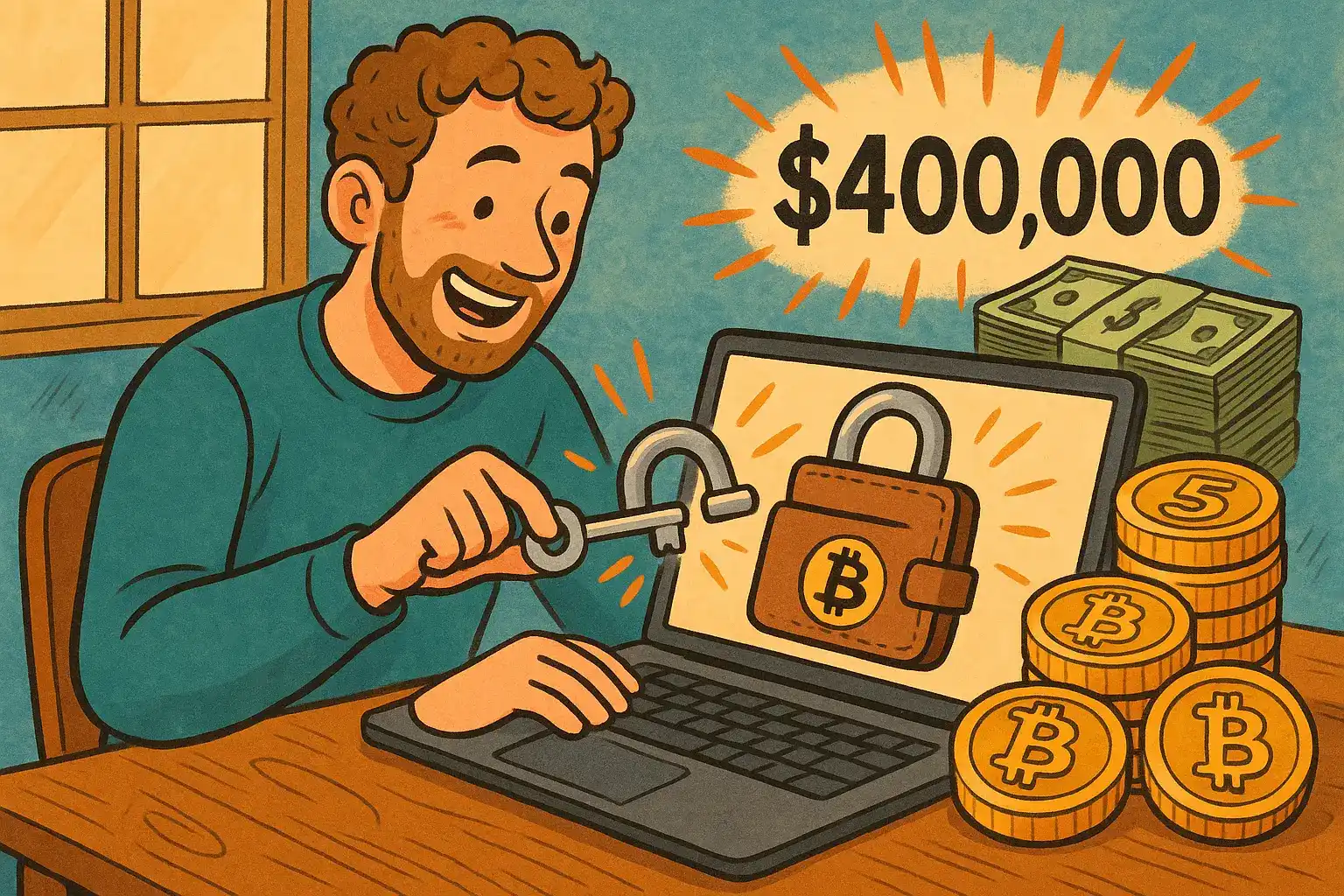
Claude Helps Man Recover 5 Bitcoins Forgotten for 11 Years, Worth Nearly $400,000

AI Chatbot Claude Helps Man Recover 5 Bitcoins Forgotten for 11 Years, Worth Nearly $400,000 A user named Cprkrn recovered a Bitcoin wallet containing 5 BTC (~$400,000), locked for over 11 years, with the help of Anthropic's AI, Claude. The wallet was originally locked after Cprkrn changed its password while under the influence in university and subsequently forgot it. Claude did not crack the password. Instead, after Cprkrn uploaded all files from his old university computer, Claude sifted through the data and located an earlier, pre-password-change version of the encrypted wallet file (wallet.dat). Cprkrn had also recently found a handwritten seed phrase, but it was incompatible with the main wallet file. Claude's key breakthrough was identifying and fixing a bug in the open-source recovery tool `btcrecover`, which had been concatenating the shared key and user password in the wrong order. After correcting this logic error and running the decryption process, Claude successfully extracted the private key, allowing the funds to be accessed and transferred. While the post garnered over 10 million views and sparked excitement, wallet recovery experts noted Claude's role was more akin to AI-assisted digital forensics—organizing unstructured historical data, diagnosing tool issues, and executing a corrected process—rather than true cryptographic password cracking. The recovery relied on pre-existing user-held data fragments: old computer files, a valid seed phrase, and an older wallet file. The story highlights a potential new, lower-cost path for recovering lost crypto assets, dependent on users retaining old data. It also occurs against a backdrop where an estimated one-third of Bitcoin's circulating supply is dormant in long-lost or inaccessible wallets.

marsbitHace 1 hora(s)

Claude Helps Man Recover 5 Bitcoins Forgotten for 11 Years, Worth Nearly $400,000

marsbitHace 1 hora(s)

Has the Winter of Crypto IPOs Arrived? Consensys and Ledger Hit Pause

Crypto IPO Winter Arrives? Consensys and Ledger Hit Pause. Following a boom in 2025, the window for crypto company initial public offerings has narrowed sharply in 2026. Major players like MetaMask developer Consensys and hardware wallet firm Ledger have recently postponed their US listing plans, joining exchange Kraken which paused its process earlier this year. This slowdown follows a strong 2025 where companies like Circle and Bullish went public, raising billions as Bitcoin hit all-time highs. However, in 2026, declining Bitcoin prices and trading volumes have cooled investor risk appetite. Newly listed crypto stocks, including BitGo, have seen significant price drops post-IPO, reinforcing investor caution. The cooling crypto IPO market contrasts sharply with the red-hot AI sector, where companies like SpaceX and OpenAI command massive valuations and investor interest based on "productivity revolution" narratives. Crypto firms, seen as more cyclical and volatile, struggle to compete for capital. The IPO delays are prompting a strategic shift. Companies are focusing on strengthening fundamentals, pursuing private funding, and expanding into more stable revenue streams like institutional services. This phase may accelerate industry consolidation, favoring firms with robust compliance and infrastructure. Analysts suggest a potential second wave of crypto IPOs in late 2026 could depend on a Bitcoin price recovery and clearer regulatory developments.

marsbitHace 1 hora(s)

Has the Winter of Crypto IPOs Arrived? Consensys and Ledger Hit Pause

marsbitHace 1 hora(s)

Trading

Spot
Futuros

Artículos destacados

Qué es XRP 2.0

XRP 2.0: Una Nueva Frontera en el Panorama de las Criptomonedas Introducción a XRP 2.0 En el siempre cambiante ámbito de las criptomonedas, nuevos proyectos surgen continuamente, compitiendo por atención y adopción. Una de estas iniciativas prometedoras es XRP 2.0, un nuevo proyecto de criptomoneda diseñado para aprovechar la tecnología blockchain avanzada y metodologías de encriptación robustas. Aunque el nombre establece paralelismos con el XRP de Ripple, es crucial señalar que XRP 2.0 opera de manera independiente, enfocándose en mejorar la seguridad de las transacciones, la privacidad y la escalabilidad. A medida que el panorama financiero digital abraza cada vez más soluciones descentralizadas, XRP 2.0 busca contribuir de manera significativa a web3 y a la expansión general de los proyectos de criptomonedas. ¿Qué es XRP 2.0? En esencia, XRP 2.0 es un proyecto de criptomoneda que busca crear un ecosistema de moneda digital seguro y descentralizado. Su tecnología fundamental integra principios avanzados de blockchain con técnicas de encriptación de vanguardia. El objetivo principal de XRP 2.0 es establecerse como una plataforma confiable y eficiente que permita la ejecución rápida de transacciones mientras prioriza la protección de la privacidad de sus usuarios. El proyecto se promociona como una solución a muchas limitaciones enfrentadas por las criptomonedas existentes, proponiendo un sistema que puede manejar un mayor volumen de transacciones con mejor velocidad y privacidad. Esta versatilidad posiciona a XRP 2.0 como un competidor significativo en un mercado plagado de diversas monedas digitales. ¿Quién es el Creador de XRP 2.0? La identidad del creador detrás de XRP 2.0 ha sido señalada como 'Wilbur.' Sin embargo, los detalles completos sobre Wilbur o su entidad asociada siguen siendo elusivos. La anonimidad de muchos creadores de criptomonedas no es un fenómeno poco común en la industria, a menudo diseñado para mantener un grado de privacidad y seguridad. ¿Quiénes son los Inversores de XRP 2.0? Hasta ahora, la información específica relacionada con las fundaciones o organizaciones de inversión que apoyan a XRP 2.0 no está disponible públicamente. En el sector de las criptomonedas, el respaldo de inversores respetables puede influir significativamente en la credibilidad y el éxito de un proyecto, sin embargo, la transparencia sobre los patrocinadores financieros de XRP 2.0 no se ha establecido. ¿Cómo Funciona XRP 2.0? XRP 2.0 se destaca al emplear una combinación de tecnología blockchain y algoritmos de encriptación avanzados que aseguran transacciones seguras y descentralizadas. Su estructura innovadora incluye características únicas diseñadas para fomentar el compromiso del usuario y ampliar las funcionalidades más allá de las transacciones convencionales de criptomonedas. Entre estas características, XRP 2.0 incorpora capacidades impulsadas por IA, como funcionalidades de texto a imagen y de texto a voz. Estas adiciones están diseñadas para mejorar la experiencia interactiva de los usuarios, promoviendo una mayor aplicabilidad en diversos sectores. Al unir avances tecnológicos con un diseño centrado en el usuario, XRP 2.0 busca captar la atención de una amplia gama de individuos y empresas que buscan integrar soluciones de criptomonedas en sus marcos operativos. Cronología de XRP 2.0 Entender XRP 2.0 requiere examinar los hitos que han definido su viaje hasta ahora: 23 de julio de 2023: Se presenta XRP 2.0 como un nuevo proyecto de criptomonedas, con el objetivo de revolucionar las capacidades de transacciones seguras y descentralizadas en el ámbito de blockchain. 8 de septiembre de 2023: Se lanza otro proyecto, XRP20, marcando la aparición de un token ERC-20 en la blockchain de Ethereum que no guarda relación con XRP 2.0. 13 de noviembre de 2023: El Libro Mayor de XRP experimenta una actualización significativa con el lanzamiento de la versión 2.0.0 del software del servidor rippled. Es esencial señalar que este desarrollo está desconectado del proyecto de criptomonedas XRP 2.0. Puntos Clave sobre XRP 2.0 Para destilar la esencia de XRP 2.0, surgen varios factores críticos: Características Únicas: La inclusión de características como texto a imagen y texto a voz impulsadas por IA diversifica aún más las aplicaciones potenciales de XRP 2.0. Tecnología Blockchain: El marco utiliza mecanismos avanzados de blockchain y protocolos de encriptación, asegurando un entorno seguro y descentralizado para las transacciones. Escalabilidad y Privacidad: XRP 2.0 prioriza la protección mejorada de la privacidad en los procesos de transacción y la escalabilidad necesaria para acomodar una base de usuarios creciente. No Afiliación con Ripple: Es importante destacar que, a pesar de su nombre, XRP 2.0 no tiene ninguna lealtad ni colaboración con el XRP de Ripple, diferenciando su marco operativo y objetivos dentro del ecosistema de criptomonedas. Conclusión XRP 2.0 representa una ambiciosa aventura en la esfera de las criptomonedas, buscando ofrecer una combinación de seguridad, privacidad y eficiencia en las transacciones digitales. Al integrar tecnologías sofisticadas y características amigables para el usuario, el proyecto se propone ampliar los horizontes de lo que la criptomoneda puede lograr en la economía digital de hoy. Si bien la anonimidad de su creador y la falta de inversores revelados pueden generar cuestionamientos para algunos, el enfoque de XRP 2.0 en funcionalidades avanzadas y descentralización realza su atractivo en un mercado de criptomonedas cada vez más abarrotado. A medida que el paisaje de las criptomonedas sigue evolucionando, XRP 2.0 podría emerger como un jugador crucial en la expansión de soluciones blockchain seguras y escalables.

174 Vistas totalesPublicado en 2024.04.05Actualizado en 2024.12.03

Qué es XRP 2.0

Cómo comprar XRP

¡Bienvenido a HTX.com! Hemos hecho que comprar XRP (XRP) sea simple y conveniente. Sigue nuestra guía paso a paso para iniciar tu viaje de criptos.Paso 1: crea tu cuenta HTXUtiliza tu correo electrónico o número de teléfono para registrarte y obtener una cuenta gratuita en HTX. Experimenta un proceso de registro sin complicaciones y desbloquea todas las funciones.Obtener mi cuentaPaso 2: ve a Comprar cripto y elige tu método de pagoTarjeta de crédito/débito: usa tu Visa o Mastercard para comprar XRP (XRP) al instante.Saldo: utiliza fondos del saldo de tu cuenta HTX para tradear sin problemas.Terceros: hemos agregado métodos de pago populares como Google Pay y Apple Pay para mejorar la comodidad.P2P: tradear directamente con otros usuarios en HTX.Over-the-Counter (OTC): ofrecemos servicios personalizados y tipos de cambio competitivos para los traders.Paso 3: guarda tu XRP (XRP)Después de comprar tu XRP (XRP), guárdalo en tu cuenta HTX. Alternativamente, puedes enviarlo a otro lugar mediante transferencia blockchain o utilizarlo para tradear otras criptomonedas.Paso 4: tradear XRP (XRP)Tradear fácilmente con XRP (XRP) en HTX's mercado spot. Simplemente accede a tu cuenta, selecciona tu par de trading, ejecuta tus trades y monitorea en tiempo real. Ofrecemos una experiencia fácil de usar tanto para principiantes como para traders experimentados.

1.3k Vistas totalesPublicado en 2024.12.10Actualizado en 2025.03.21

Cómo comprar XRP

Discusiones

Bienvenido a la comunidad de HTX. Aquí puedes mantenerte informado sobre los últimos desarrollos de la plataforma y acceder a análisis profesionales del mercado. A continuación se presentan las opiniones de los usuarios sobre el precio de XRP (XRP).

活动图片